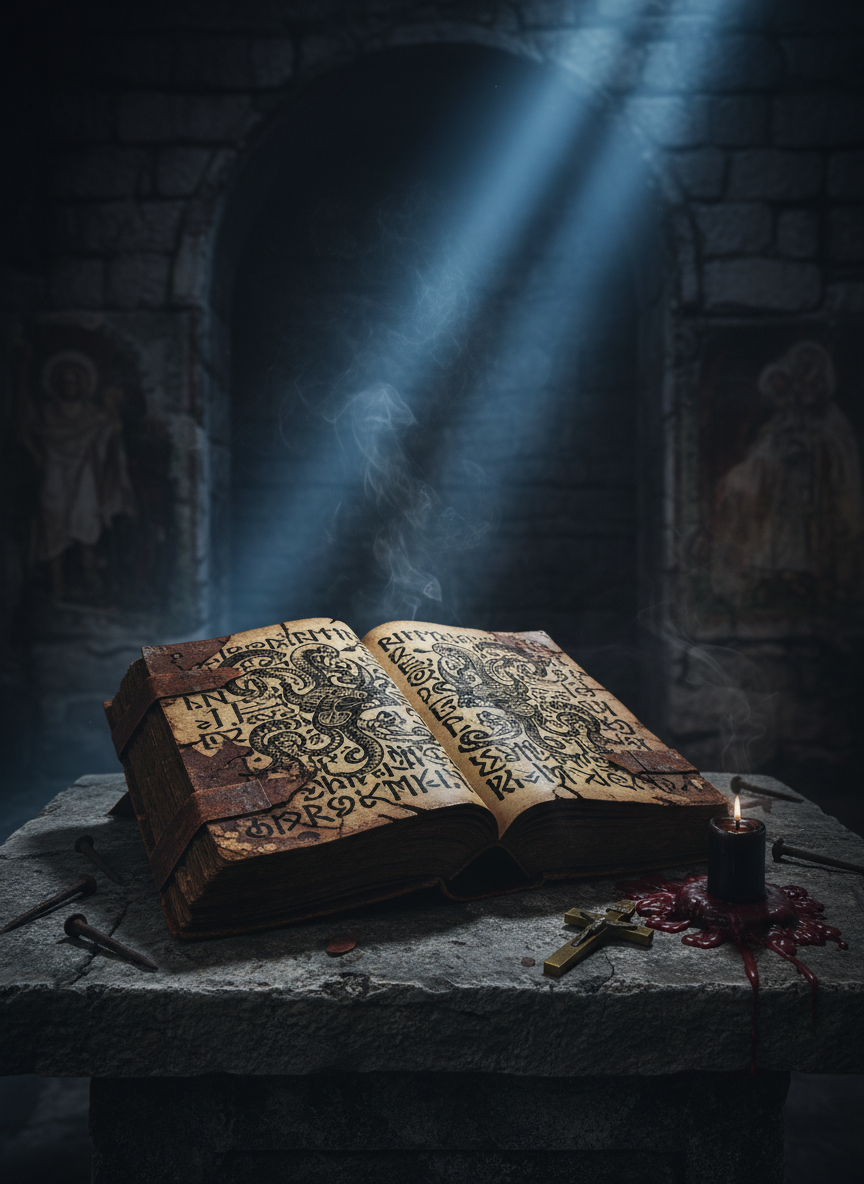
A thick, weathered leather-bound book lies open on a rough stone altar, its yellowed pages filled with intricate, unreadable glyphs that seem to twist into Lovecraftian shapes. Around it, scattered rusted iron nails, a tarnished brass crucifix, and a single black candle burned nearly to the base with wax pooled like dried blood. The room is a shadowy crypt with cracked walls and faint traces of forgotten murals. A cold, bluish shaft of light falls from an unseen opening above, cutting through swirling dust and smoke, leaving the background in deep darkness. Photographic realism, shot at eye level with a shallow depth of field that keeps the book razor sharp, evoking a mood of sacred dread and spiritual warfare.

The Voice

Poetic dispatches from the wired battlefield where empires, algorithms, and principalities collide in real time.

Dispatches

About

Enter The Voice Manifesto

Here the sirens of empire, data, and doctrine howl at once. We answer with poems as counter-signal: questioning power, naming demons, and listening for the still small frequency under all the noise.

On a rusted metal table in a dim underground bunker, a suit of medieval-style armor lies disassembled, each piece carved with overlapping biblical verses rendered as complex, unreadable sigils. The breastplate is pierced by a jagged hole, through which faint, sickly green light seeps, hinting at something parasitic within. Scattered around are dog-eared notebooks, a cracked vinyl heavy metal record, and obsolete computer chips, all dust-covered yet meticulously arranged like relics. Overhead, a single flickering fluorescent tube casts harsh, cold light, emphasizing scratches and dents in the armor. Photographic realism shot from a slightly overhead, three-quarter angle, with selective focus on the glowing wound in the breastplate, creating a mood of weary spiritual warfare intertwined with modern culture and technology.

Testimonies

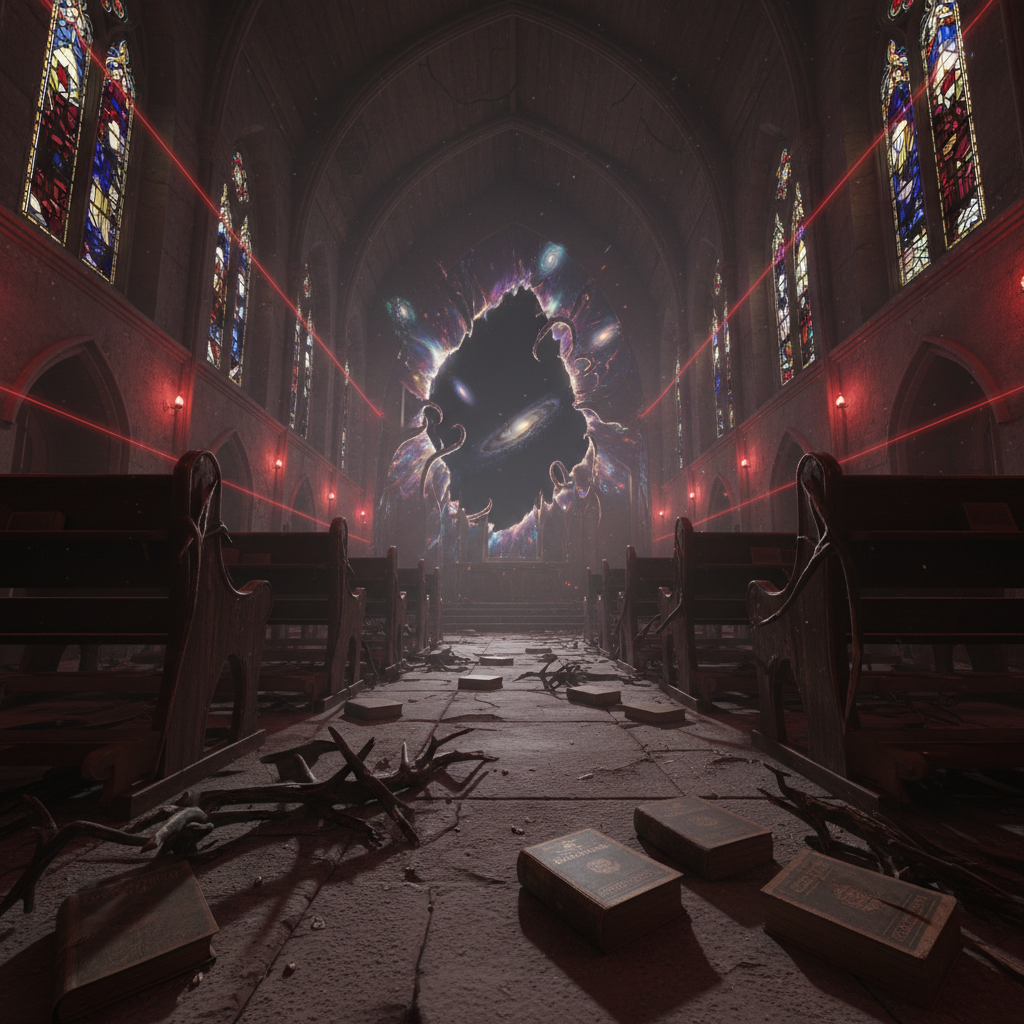
A desolate church nave stretches into shadow, wooden pews splintered and overturned, hymnals scattered like fallen leaves on a dust-choked stone floor. At the far end, where the pulpit once stood, a jagged black void gapes open, its swirling interior faintly shimmering with hints of distant galaxies and tentacled silhouettes. Faint crimson emergency lights line the side walls, casting long, unsettling shadows across cracked stained-glass panels that now show only fragmented, abstract colors. Photographic realism with low-angle perspective from the aisle, deep depth of field drawing the eye toward the cosmic chasm. The lighting is sparse and directional, creating an atmosphere of apocalyptic worship and cosmic horror, as if liturgy has been replaced by dread.

Hope D.

These poems feel like prophecy whispered through feedback and scripture—equal parts nightmare and prayer. I leave shaken, but finally awake.
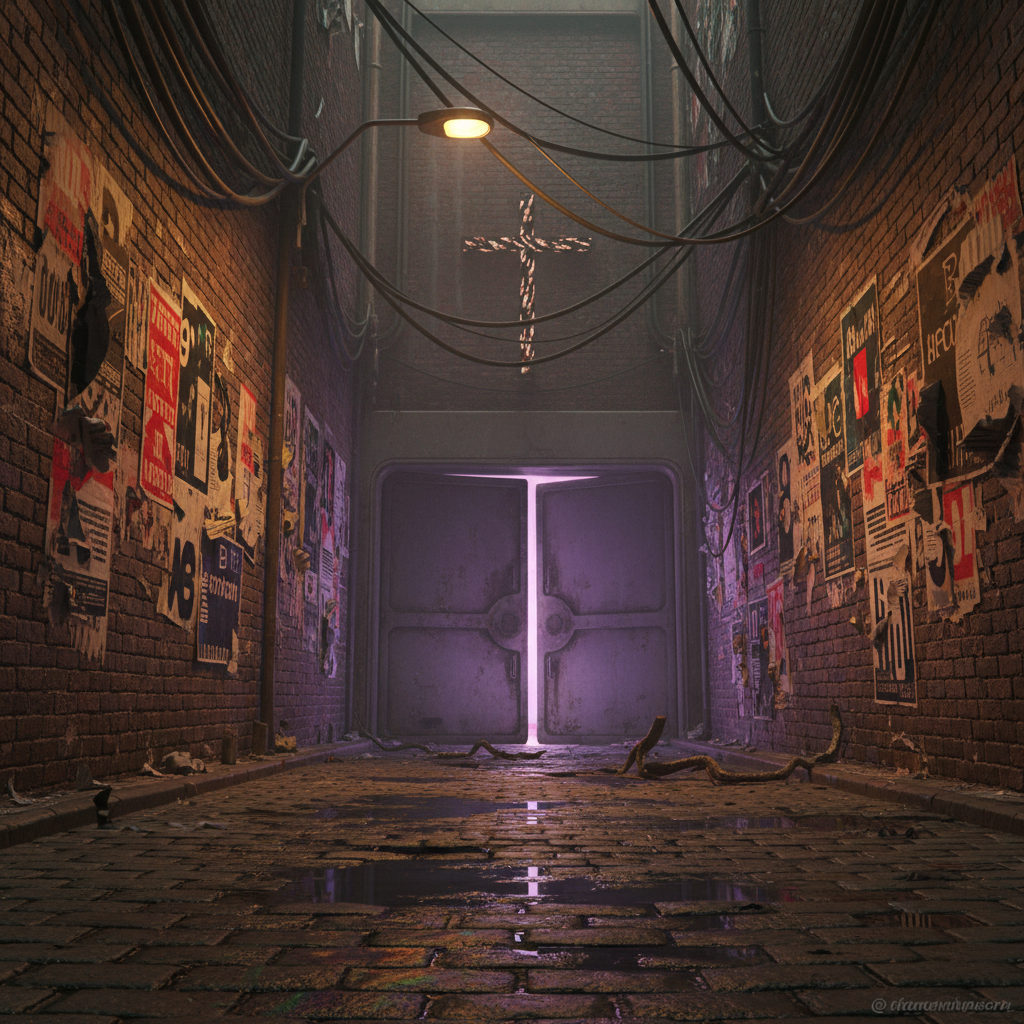
A narrow alley in a dystopian city glistens with oily puddles, its walls plastered with torn, overlapping posters bearing abstract symbols and glitch-like patterns in red, black, and white. Overhead, tangled cables droop between leaning buildings, some wrapped around a rusted iron cross bolted high on a brick wall, faintly illuminated by a malfunctioning sodium-vapor streetlamp. At the alley’s dead end, an ominous steel door is slightly ajar, leaking a soft, unsettling violet glow that reveals strange, worm-like shadows on the wet cobblestones. Photographic realism with a cinematic, eye-level composition, deep perspective leading the viewer toward the door. The lighting is gritty and urban, with high contrast between amber streetlight and eerie violet, evoking a mood of urban spiritual dread and political cyberpunk decay.

Hope D.

No other poetry site dares stitch Lovecraft, protest chants, and psalms into one wound. It hurts—and somehow heals.

A thick, weathered leather-bound book lies open on a rough stone altar, its yellowed pages filled with intricate, unreadable glyphs that seem to twist into Lovecraftian shapes. Around it, scattered rusted iron nails, a tarnished brass crucifix, and a single black candle burned nearly to the base with wax pooled like dried blood. The room is a shadowy crypt with cracked walls and faint traces of forgotten murals. A cold, bluish shaft of light falls from an unseen opening above, cutting through swirling dust and smoke, leaving the background in deep darkness. Photographic realism, shot at eye level with a shallow depth of field that keeps the book razor sharp, evoking a mood of sacred dread and spiritual warfare.

Hope D.

Reading here feels like scrolling a sacred darknet: political fire, spiritual warfare, and neon-lit dread braided into brutally honest liturgy.

On a rusted metal table in a dim underground bunker, a suit of medieval-style armor lies disassembled, each piece carved with overlapping biblical verses rendered as complex, unreadable sigils. The breastplate is pierced by a jagged hole, through which faint, sickly green light seeps, hinting at something parasitic within. Scattered around are dog-eared notebooks, a cracked vinyl heavy metal record, and obsolete computer chips, all dust-covered yet meticulously arranged like relics. Overhead, a single flickering fluorescent tube casts harsh, cold light, emphasizing scratches and dents in the armor. Photographic realism shot from a slightly overhead, three-quarter angle, with selective focus on the glowing wound in the breastplate, creating a mood of weary spiritual warfare intertwined with modern culture and technology.

Hope D.

Every section carries a different charge—Litanies, Selah, The Voice—but together they map the terrorized soul of our age with fierce clarity.